After a summer writing mostly letters to Jean, I started a grief writing group in October. As the name suggests, it combines a writing workshop with group counseling, with differences from each. Unlike writing workshops, this group values writing as it facilitates the grieving process; the point is to explore emotions, not to prepare for publication. And unlike other counseling groups, this one has a strangely anonymous feel; some of the questions you typically have about people are impolite to ask. For example, based on the quality of the writing -- can't help but notice -- I suspect not all of us are amateurs. But profession would be an awkward topic to raise, it crosses the boundary of knowing each other chiefly as people coming to terms with loss(es). I'm not objecting; there is a stimulating, leveling something about being forced to relate to fellow humans on the basis of a terrible, not-quite-inevitable commonality.
Every week we get writing suggestions, such as "describe or imagine your beloved's final hours," along with examples of poems showing how much can be done with that approach. Notable among these examples are excerpts from Without by Donald Hall, a collection of poems clustered around Hall's experience of losing his wife Jane Kenyon to leukemia. Without consists of twenty-one short-line free-verse poems, twenty of which tell the story in chronological order. The exception, Her Long Illness, winds around the first seven poems until arriving at the end of that illness, and the poem that lends its title to the book. In addition to being much longer than any of the others, Her Long Illness looks different on the page because the lines are grouped into couplets of a short line of about three stresses, then a long line of around five. Hall has a preference for end-stop lines, and at times I suspect an iambic intent.
Hall's tone is conversational, direct, unaffected; like it, reminds me of Jean. It's possible to read distractedly past one of his beautiful images, then wonder about the power of simple language after something tugs at your eye and says backup. As in the last stanza of Letter in Autumn, about visiting Jane's grave:
...
Looking south
from your stone, I gaze at the file
of eight enormous sugar maples
that rage and flare in dark noon,
the air grainy with mist
like the rain of Seattle's winter.
The trees go on burning
without ravage of loss or disorder.
I wish you were that birch
rising from the clump behind you,
and I the grey oak alongside.
-- from Without by Donald Hall
But in my opinion, the most powerful lines belong to Her Long Illness. In this excerpt, after Jane's hematologist told them "I have terrible news," they're working together on selecting poems for a collection, and on writing an obituary:
...he saw how weak she felt
and said maybe not now; tomorrow?
Jane shook her head: "Now," she said.
"We have to finish it now."
Later, as she slid exhausted into sleep,
she said "Wasn't that fun?
to work together? Wasn't that fun?"
-- from Without by Donald Hall
Another Jean reminder. Some of the sweetest marital moments of the technical editor and the computer programmer were when they worked together on their writing, and it was indeed fun, and they kept at it even after Jean entered Zen Hospice. Kept going until nearing the end of the sequence described in this stanza a few pages later:
One by one they came,
the oldest and dearest, to say goodbye
to this friend of the heart.
At first she said their names, wept and touched;
then she smiled; then
turned one mouth-corner up. On the last day
she stared silent goodbyes
with her hands curled and her eyes stuck open.
-- from Without by Donald Hall
This could sound unbearably familiar, if you've ever been inducted into the hospice club. And if you questioned our group's use of writing as therapy, imagine you were Hall, and somebody in your writing group compliment you on how the quiet images in these lines built to a wrenching crescendo. Which of course they do, and you’d revised and revised to make it so. But she's still gone, and part of you died with her; you might not be in the mood for praise.
As for me, most weeks I've struggled to tell what it was like to be married to Jean, and to avoid talking about what it's like now. Part II of that formula gets no prize for emotional authenticity; perhaps writing poems in the manner of _Her Long Illness_ would help me look in both directions? Worst case, the format is possible to imitate/fake within a week; and if the writing doesn't work either as poetry or therapy, the plot is simple, so the reader can quickly move.
There's only poem remotely blog-ready at Thanksgiving time 2013, but more could come, and Time Management for the Bereaved Computer Programmer seems a clever working title for a series. Too clever? But grief does focus you on time: wishing it could run backwards; wondering if it really heals wounds and whether, in all truth, you want to be healed. If you look at the Without table of contents with the male penchant for keeping score, you can count three titles that name seasons, three others that name holidays, one that names a specific date, and two an indeterminate time span (Last Days and Her Long Illness). Do nine time-related titles out of twenty-one constitute a significant trend? If not, and mixing poetry with time management is just silly, at least daydreams of a poetry collection provides an opportunity to promote Hall's book.
Saturday, November 30, 2013

Sunday, June 30, 2013
Pictures from Jean's Ann Arbor Memorial, June 9, 2013
 |
| Gathering for the memorial. Front row Ray Lewis; next row Laurie Abbott; next row Anne Lewis; back row from left to right: Phill Stoll, Pat Sutton, Yao Louis, Yao's daughter Sally, and Yao's sister and mother; walking in back: Jeff Taras. |
 |
| Babak "Shadie" Rowshan |
 |
| Anne Lewis |
 |
| Ray Lewis |
 |
| Phil Stoll |
 |
| Phil playing fiddle |
 |
| Laurie Abbott |
 |
| Yao Louis with Anne Lewis for support |
 |
| Amy Garber |
 |
| Ellen McCarthy |
 |
| Will Lovick |
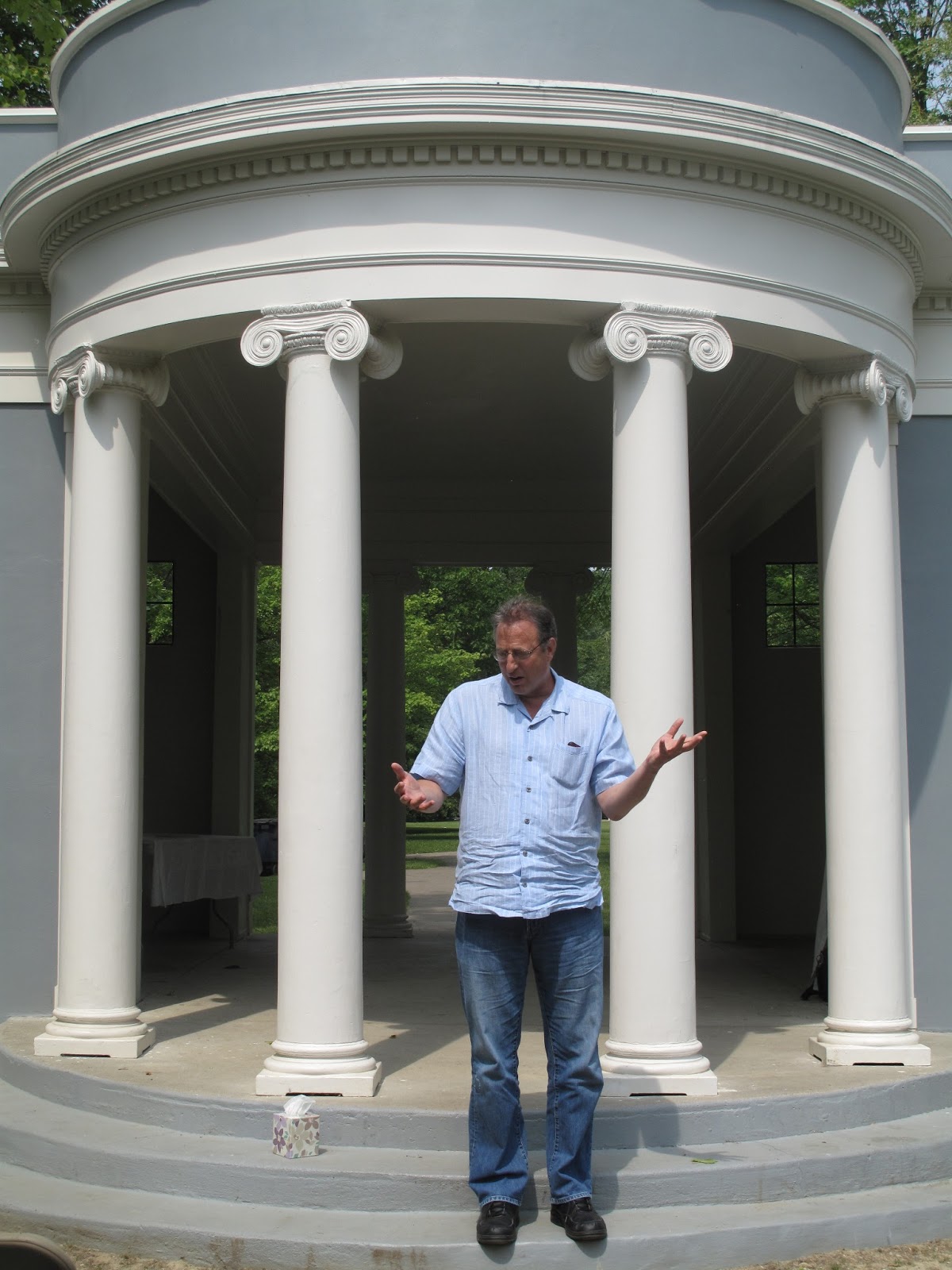 |
| Pat Sutton |
 |
| Iris Wiinikka |
 |
| John Hogen |
 |
| Bouquets on reception table |
 |
| Present in spirit. With Matt in 2012, after returning from her Hawaii vacation with Anne, before finding out that the tumor was back. |
 |
| On backyard stairs leading down to the creek Amy, Yao, Anne, Phil, Will, Ray |
 |
| Closer to the creek: Yao (cropped), Amy, Laurie, Ellen, Pat, Shadie |
Wednesday, June 12, 2013
NBTS Donate 2013
It's not too late to donate even after the Bay Area Brain Tumor walk. Use the link below and remember Jean and Jonathan and help the cause
Donate to Jean and Jonathan's National Brain Tumor Society Fundraising Team
Donate to Jean and Jonathan's National Brain Tumor Society Fundraising Team
Monday, May 27, 2013
Obituary for Mickey Pico by his daughter Sasha
Mickey's daughter Sasha wrote a moving tribute to her dad, including a photo of Mickey at his bagel stand, for the online edition of the Juneau Empire. Many people have read it, and left comments saying that they appreciated Sasha's words, and that Mickey meant a lot to them. Please read it and add your signature to the guest book!
Tuesday, May 14, 2013
A Knight in Tattered Armor
 |
| Mickey's Bagel Bistro, Juneau Alaska Mickey took great ride in his bagel stand, and always thought of it was one of his finest achievements. |
My older brother Mickey Pico died Sunday May 12 around 5 am while in hospice care at the Sutter Medical Center in Santa Rosa, 15 years after he was diagnosed with hepatitis C, less than a year after the doctors discovered he had liver cancer. He was 65 years old. His funeral will be Thursday, May 16, at 10 am, in the Garden of Tranquility at Oakmont Memorial Cemetery, 2099 Reliez Valley Road in Lafayette. He is survived by his 12 year-old daughter Sasha, and his estranged wife Joni.
Mickey was never a home owner. He loved to take road trips, and his belongings are scattered at friends' houses up and down the Pacific coast, where he deposited them over the past year.
The way Mickey lived his life is actually part of a Pico family tradition, exemplified by our dad, Charlie Pico, whose grave is just a few feet from where Mickey will be buried.
Similar to his dad, Mickey was a street vendor, and ran a popular bagel stand in Juneau Alaska for many years. His appearance was striking. He often would shave his head to show empathy for friends and family members going through chemotherapy and favored Bermuda shorts. A different look that gave a message that went something like "The most important thing is to tune-in to the pain of others. You can always find a way to survive, and do that while conceding very little to convention."
Survive he did. Mickey always had a job, but sometimes his living arrangements were Spartan. There were times in Alaska -- Alaska! -- when he actually slept in storage space he rented, using the YMCA for a bathroom and shower. The family thought in some ways that he was trying saying he could be as resilient as dad, and we got the point: Mickey was tough.
They were also similar in their generous spirits. One thing that everyone noticed about Mickey was that he never ignored a pan-handler, and he always gave them paper, not coins.
Mickey and Joni's marriage floundered after he was diagnosed with hepatitis C. They separated, and Mickey started to put energy into taking care of mom. It turned out that he had many qualities of an excellent caregiver. He was always patient and accepting. while encouraging mom to try to do as much as possible for herself. Best of all, he really loved her, and always gave her the sense that caring for her was exactly what he wanted to do with his life.
This arrangement was hard to maintain after mom became too sick to stay in her home. Mickey slept on the floor beside her bed in the hospital, so she wouldn't be scared and alone if she woke up in the middle of the night. The result was back pain so severe he needed to be hospitalized at John Muir. While he was there, he told a social worker he had not been getting enough to eat. That was not something he shared with anybody in the family; I just found out when Sutter asked John Muir for his medical records.
Esther died in February 2012. Mickey and I were co-trustees of her trust, and Mickey had the task of preparing the family house for sale. He did a good job and we ended up getting a good price. Afterwards, Mickey immediately set about spending his share of the proceeds according to his principles, without consulting anyone. He bought a gravestone for mom, and memorial plaques for her and her sister Lillian at Temple Isaiah. He made a contribution to the Bay Area Brain Tumor Walk in honor of my wife Jean. He gave a few thousand each to two women who had provided care and companionship for Esther. He made a 40K undocumented cash loan to a woman he used to work with at Costco whom he felt sorry for because she was a breast cancer survivor.. By January of this year he had spent his inheritance. Joni and Sasha were not entirely pleased.
But they were still the two people closest to him, and this April he decided he would drive down from Juneau to spend Mothers Day with them in Champagne, Illinois. He came through the Bay Area on his way, to check-in with family here. On Friday, April 19 we had lunch together in Concord. We had a pleasant chat, and although his voice was a bit faint he did not seem noticeable worse than before. He told me he would be staying a few days at the Motel 6 before heading east.
On Friday May 3 Joni called to say Mickey was in the Sutter Medical Center in Santa Rosa, after being found walking around dazed near his car following a minor accident. She and Sasha flew out to California on Sunday, and the three of us drove up to visit Mickey. He was in the ICU, mostly unresponsive, but occasionally becoming agitated, pulling on his restraints and yelling "Let me out of here." However, he became aware of Sasha's presence after she was in the room with him for a few hours, looked at her with recognition, and told his daughter that he loved her.
The Sutter doctors found that Mickey's liver function was almost completely gone, and as a result his kidneys had collapsed. They were never entirely sure why his mental state had deteriorated. One theory was that it could be related to a possible stomach infection, and he was given antibiotics until the bacterial cultures came back negative. Another was that it was caused by a buildup of protein bodies, a long-standing problem for which he took lactulose. Those protein body levels were high when Mickey entered the hospital, but he was no more alert after they administered lactulose and brought them down within normal range. With those theories shot down, they decided that his mental condition was part of the systemic failure caused by the progression of his cancer.
In January Mickey had signed advanced directives saying he did not want to be resuscitated, that he wanted "comfort care" if the doctors decided that he was approaching the end. Once antibiotics and lactulose proved ineffective, Sutter switched to comfort care, and he was disconnected from all his IVs. If you've never seen anyone terminally ill, this approach can seem anything but comfortable. It meant that Mickey received no fluids and nutrition, which according to common sense seems cruel. But he was not dehydrated, fluids were accumulating in his extremities, and they could not feed him for fear that he would aspirate. The major medication he received in his last days was morphine, to make his breathing easier.
On Saturday May 11 I cleaned out the Dodge Caravan that Mickey had been driving when he had his accident. He had been sleeping in his car, not just at the Motel 6. But he had been too proud to tell me about it, just like he wouldn't say he needed more food when he was caring for Esther at the hospital. His last living circumstances had been harsh.
That evening in Mickey hospital room, one of the nurses brought Sasha a flute. She gave us all a long concert while Joni and I sat in a meditative silence, and Mickey lay unresponsive. Then Joni and Sasha went back to their hotel, and I sat and held Mickey's hand for several hours, telling him family news and appreciations that I doubt he understood. Around 5 am two of the staff came to turn him on his back, and when I saw him open his eyes I started in again with what seemed to need to be said. "Your vexing kid brother is here with you," I told him, "your beloved daughter Sasha has come to visit, and we all love you for being a free wheelin' travelin' man, crazy generous, living for principles, very, very good to mom." I thought his eyes brows twitched, maybe this time it got through. Then he passed. He had made it to Mothers Day.
Sunday, April 14, 2013
The team t-shirts will be ready by April 24
 |
| t-shirt front |
 |
| t-shirt back |
If you would like one of these shirts, simply show up at Speedway Meadows in Golden Gate Park on Saturday May 4, and walk with our team. Anyone who donates at least $15 to the team can also get a shirt, just send email to Matt at 1853wsvm@gmail.com and ask for one.
Click here if would like to to donate and/or signup for our team: Glio Warriors for Jean and Jonathan
Thursday, April 11, 2013
The gardens look a lot better after last weekend
 |
| Lindy Ruddiman and Kevin Hansen, in the vastly improved Wood St. backyard |
Those of you who have visited on Wood Street in recent months doubtless retain a vivid impression of the sad state of Jean's garden projects. For example, it would have been painfully accurate to describe the area adjacent to the garage as a jumble of weeds and potted roses, plus a persimmon tree that had outgrown its pot and seemed determined to stay put. And then there was the orchard, where the weeds were even higher, and after many years without pruning, the fruit trees sported a tangle of crossover branches. Not to mention the side yard, hard to even walk through with the rose canes arcing six feet from the neighbor's fence right up to the the house, and coils of crabgrass underfoot.
Last weekend saw some improvements. On Saturday Nick Galloro came over, rolled up his sleeves, and by the time he left the side yard was a paragon of verdant decorum. Crabgrass gone; one could stroll from one end of the house to the other on a wide swath of landscape fabric, without a rose prickle even coming close. John Gregorin and Susan Torngren came over too, working in the backyard. Weeds gone; there are now three slightly elevated plantings, containing the roses that used to be in pots. And after a mighty effort, that persimmon tree now has a permanent home at the back of orchard, near what we Alamedans call the green belt.
More friends came Sunday. Lindy Ruddiman and Kevin Hansen went out to the orchard and pruned the apple trees. Kevin also drew up plans useful for installing an automatic sprinkling system, on that blessed day when the Wood St irrigation technology becomes more contemporary. And Ted and Noah Hayes came over and staked down landscape fabric on areas of the backyard that John and Sue cleared Saturday, but which have not yet been planted. The photo shows Lindy and Kevin posing by the handiwork of John, Sue, Ted, and Noah.
Thanks to all seven of you for your help. Of course much remains to be done, much. But after long months of neglect, the gardens have a fresh start.
Subscribe to:
Posts (Atom)